> Approximately 80% of the income of traditional capitalist conglomerates go to salaries and wages, according to Varoufakis, while Big Tech’s workers, in contrast, collect “less than 1% of their firms’ revenues”.
This doesn't sound right to me, but if it is Varoufakis has a point.
Our contract, such as it is, with traditional capitalists is they employ many, produce some sort of value and keep as much profit as they can manage after labor and expenses.
If the Amazons and Googles of the world can generate their enormous revenues (and profits) without dispensing much of it to labor, essentially just collecting large rents in perpetuity, both traditional capitalists and workers are in serious trouble. That is a big shift.
Google's revenue in 2022 was $280 billion. 1% of that would be $2.8 billion, and Google had 190000 employees at the time. I'm pretty sure the average wage of those employees is not $14,736, so Varoufakis would appear to be off by at least a factor of 10x.
On the other hand, if Google did pay out 80% of revenues, the average Google paycheck would be a cool $1,178,947.
Agreed. I was also part of the Kenna acquisition after being there for 2 years and am still there.
My equity got paid out quickly, I have since gotten raises and bonuses, and the only shittiness has been all the mega-corp nonsense (omg the trainings) and worse health insurance.
Cisco is not a nightmare acquirer, that would be Amazon. If AMZN had acquired us I'd have left immediately.
Nothing yet. I'd imagine it will go through appeals for a few years before anything actually happens, and U.S. antitrust enforcement has not exactly been a powerful force for the last few decades.
> KANSAS CITY, Mo.—A federal jury on Tuesday found the National Association of Realtors and large residential brokerages liable for about $1.8 billion in damages after determining they conspired to keep commissions for home sales artificially high.
> The verdict comes in the first of two major antitrust lawsuits that target decades-old industry practices and seek to drive down commissions and change the way agents are compensated. The two-week trial involved claims by home sellers in several Midwestern states. The jury issued its verdict after just hours of deliberations.
> Under antitrust rules, the presiding judge could triple the damages verdict, which would total more than $5 billion. The plaintiffs also have asked the judge to order changes to how the industry operates.
> For several years NAR has been fending off accusations by U.S. antitrust officials and private litigants that it has conspired to keep home-sale costs high in the face of major technological upheavals. This verdict is by far the group’s biggest setback yet.
> An NAR spokesman said, “This matter is not close to being final as we will appeal the jury’s verdict.”
I would love for there to be some sort of competition injected into real estate commissions. I've bought and sold twice now and you get the same rate from everyone (within 1%) regardless of what they end up doing.
I bought a few years back and we didn't really use an agent to find the house at all. Looking into it, I found that a certain percentage of the sale amount goes to pay the agent(s); 6% I think. If there are two agents, they each get half. If one person doesn't use an agent... the other person's agent gets it all. The person without an agent doesn't get to keep their half... it just all goes to the other agent. Wtf...
So anyways, we wound up bringing in an agent to help us out with the last bits, because we had to pay the money anyways, it might as well go to someone that helped us in some way.
The real estate process is fairly broken, as far as I'm concerned.
Technically, the 6% goes to the Seller agent. They promote on the listing how much they're willing to share with the Buyer's agent; half is customary but not set in stone.
There are agents for your situation. They'll collect the 3% (or whatever it is) and rebate it back to you at or after closing; less some fixed fee ($600 in my experience). They are not going to do much for you, but if you already found the house yourself and are familiar with the buying contracts/process. It's an option that can save you a lot.
This may differ by state of course. My experience is limited to Texas. But I've bought and sold property using these type of agents. When selling, you just do all the work (hire a photographer $200-500, write the description $0+, and they load it to the MLS for you as the listing agent). I'm of the opinion that for most properties, the only value added marketing is the MLS. When they talk about their websites and portals and ads they run in print media I roll my eyes.
It's like this throughout the real estate and real estate development industries to be honest. Building my own house I expected plenty of savings over buying (and to be fair, I still did of course), but even beyond permitting (which is also more about who you know than what you know) I encountered things like this (roughly from most mind-boggling to least):
- You can't build a septic system, you have to use sewer because you're in city limits (later rescinded when they realized they would have to pump my sewage up to the city sewer.
- You need to hire an engineer to make sure your lumber is ok (we milled our own lumber)
- You need to hire an architect to make sure your plans are ok
- You didn't finish in 6 months? Buy a new permit please.
I know there were a million more things like this, but it's been over ten years and some things you don't want to remember... Contractors act like I'm taking food out of their kids' mouths by wanting to do the work myself, and the municipality is on their side.
Your list of “mind-boggling” items all seem extremely reasonable to me.
Your city and neighbors don’t want to be responsible for or have to deal with your house falling down because it was improperly constructed. And having lived in neighborhoods with septic systems most of my life, a little neglect can go a long way.
Unless you’re building in the middle of nowhere (far from anything labeled a “city”), there are obligations to those around you.
Signed, someone whose neighbors properties have dilapidated buildings in various states of disrepair.
They usually aren't it's an argument used to scare people into making housing stock replenishment more expensive and lock in property values.
I'm building a house now. I sent the county... A picture of a square on a map. No plans no inspections nothing. Fuck all that. I build based on what seems reasonable after a cool Busch Light and then I just do it without asking permission from anybody.
Half my county did the same. It's not rocket science, and the world here hasn't fallen apart or burned down. But you will be told the opposite to get locked into expensive contractors and corrupt inspectors and the cash extracting nightmare licensing and permitting systems that surround that.
And before anybody gets too excited... this is all 100% legal if you pick the right spot.
When my neighbor's house fails and causes damage to my property, I'm not legally "responsible" but I still have to deal with a whole lot of negatives. Hence the "or deal with it" part of OP's statement. Far better to reduce the risks by making sure the project isn't being half-assed up front.
Depends on the specific thing, but generally it's because there might be consequences to doing things poorly that would spill onto your neighbors, or which might cost the local government money to fix after it hurts or kills you. It's the same kind of reason that laws requiring motorcycle helmets or seatbelts exist.
The sewer one is obvious, since it could be a public health issue -- if you screw it up you could wind up contaminating local water sources (or just stinking up the area). Issues with the lumber you use, or with your building plans, could potentially result in your house collapsing in such a way that it might damage your neighbor's property. And getting a new permit if you take too long is probably just a way to force you to check in and make sure that you're not deviating from the earlier plans you filed.
If my neighbor doesn't wire their home to code and it burns down and the fire spreads to my house it doesn't matter who is "responsible", I'd still lose my stuff (or my life).
Hell, if my neighbor's tree falls into my property and causes damages I can't be sure I'd be fully compensated for my losses. You can take someone to court, but they can't give you what they don't have.
People also just don't want to live in slums filled with run down barely standing shacks since it hurts their property value too. Part of living in a community means giving consideration to other people around you. The closer you are to others the more responsibility you have to be considerate of your impacts on those others.
How many lives of man hours are lost from overhead for these costs and compliance? The issue is people enforcing these regulations see the dead bodies from the burned out home but not the dead bodies of the homeless or the kids with less food or the dude with untreated cancer because regulatory costs and materials safety margins sucked away money that could've been spent on other life critical things.
At this point it seems completely plausible more lives would be saved through complete deregulation including setting loose uncle joe the methhead electrician.
RE:
>cities to turn into dangerous shanty towns where anyone who can lean a piece of corrugated sheet metal against a mud pile can call themselves a home builder.
My whole county did this. No inspections or building plans. It turned out fine. I became a legal 'home builder' with nothing more than filing my signature with the county. It's the only way I can even afford a house.
re county: believe the options are unincorporated burrows of Alaska, greenlee or cochise Arizona, Jackson Wayne and several other county in Tennessee, bunch of others.
If kids can't get food that's a problem entirely separate from the costs of an electrical inspector. No one builds a house and then becomes homeless because of how much it cost to make sure it was up to code.
I'd agree that those costs shouldn't be excessive, and they may even be higher than they should be right now, but we've got plenty of examples of what deregulated construction leads to and it's never the utopia you'd imagine. It's much better to have sane standards than to deregulate and allow our cities to turn into dangerous shanty towns where anyone who can lean a piece of corrugated sheet metal against a mud pile can call themselves a home builder.
I'm certain that I can find more evidence that a lack of regulation leads to deaths than you could of code compliance causing untreated cancer. In fact, some regulations prevent building homes using materials that we know have caused cancer. Feel free to try to find a study or evidence that suggests otherwise though.
> The issue is people enforcing these regulations see the dead bodies from the burned out home but not the dead bodies of the homeless or the kids with less food
Right. It's exact same problem as the FDA. If the FDA approves a drug and it kills people, they look bad. If they don't approve a drug and that kills people, no one blames the FDA because the FDA's victims in that case are invisible.
> People also just don't want to live in slums filled with run down barely standing shacks since it hurts their property value too.
Someone else's property value is their problem, not mine. You're not guaranteed that the value of an investment is going to go up. It's called "risk", dude. Your opinion of what I should do with my property does not trump my opinion of what I should do with my property.
At one time, people claimed that their property values went down when a black family moved into the neighborhood. Guess what? They eventually had to suck it up and live with it.
> Your opinion of what I should do with my property does not trump my opinion of what I should do with my property.
This is true in some ways, and false in multiple other ways.
1. Fire (and similar) codes exist because other people don't want their homes to burn down because you didn't want to spend the money to safely build your electric/gas/whatever system.
2. Certain codes exist related to upkeep because, if your building become derelict and infested with rats, it's going to negatively impact the livability of the ones around you.
3. Some places you can run a business, other places you cannot. Zoning rules are extremely common. In fact, they are widely considered _too_ common, but even most people pushing back against them don't think they should not exist at all; just not be so strict.
4. Some places have rules set up as to what's allowed (length of grass growth being an example); sometimes as an HOA rule, sometimes as a government rule. And these exist both for health and for "this is what we think is nice".
If enough people in your area want _everyone_ in your area to uphold a certain standard, then yes... their opinion _does_ trump yours. Because that's how society works; people decide, as a group, what is allowed and what isn't.
> If enough people in your area want _everyone_ in your area to uphold a certain standard, then yes... their opinion _does_ trump yours.
And yet, weirdly, you're no longer allowed to prevent someone from selling their house to a black family, no matter how many "people in their area" want to forbid it. How do you explain that?
Majority rule isn't the only rule, dude. Individual rights are still a thing.
> Someone else's property value is their problem, not mine.
On an individual level, sure, but if we have a repeat of 1929 or 2001 or 2008 or 2020 (we'll see about 2024), even if you're not personally directly affected, there are going to be ramifications that affect society beyond a couple of unlucky individuals. We don't really need another once-in-a-lifetime economic event.
> What makes you think you're entitled to an increase in your "property value" at the expense of someone else?
The exact same thing that makes me think I can't just walk into your home and take what I want, because I want it and you're not using it. The rules set forth by the society we live in, as decided by the people living in that society. Sure, not all the rules are great; many of them are awful. But the solution to that is to fix the rules, not to say there shouldn't be _any_.
No, that's not the way it works. When you move into a neighbourhood, a city, a state/province, and a country, you implicitly agree to abide by the rules. If the rules say you're not allowed to build your own house without approval of the design from an architect and an engineer and then you ignore them at your legal peril.
No one's entitled to returns on any investment, of course. But would you expect investors to stand idly by while their investments lose ground? Or would you expect them to take whatever opportunities are available to them to protect their investments?
The municipality is on their side because many people who try to get variances on these things are legitimately cutting terrible corners that compromise both the safety of the inhabitants (present and future) and the neighbors. It's inconvenient, but these regulations save a lot of lives/QoL from bad/naive actors.
The municipality is on their side because they're overworked.
In even the smallest town, if any appreciable percentage of new builds required custom handling... the system would instantly be person-starved and start backing up.
Business-as-usual is the fast/efficient path from a paperwork standpoint. Anything odd is (a) discouraged and (b) looked at with annoyance because it takes more time.
One reason it's almost always cheaper to tear-down fire damaged houses with still viable framing. No one wants to take the time to quantify exactly how much the framing was damaged.
My town solved the guilty until proven innocent issue regarding permits by just giving people carte blanche. Imo this is far more rational: if the county can't/won't verify paperwork they should default towards freedom and let the property owner have at it rather than presuming guilt and saying you haven't the money/people to check it.
Granted people aren't rich where I live so we'd rather them live in potentially a subpar house and maybe have it fall in on them than be homeless and die from the elements.
Re below: USA / Arizona. Pick the right county and no code inspections.
Why is number one the most boggling? Not dealing with sewage correctly is a public health hazard. In most places if there is a sanitary sewer hookup you must, by law, connect to it. Now in your particular case they don't have a sewage lift, but if one is ever installed it is likely you will have to connect to it if you ever need to do septic maintenance again. I certainly hope your municipality requires regular inspections of your septic so you're not flowing shit water into the local environment.
> - You can't build a septic system, you have to use sewer because you're in city limits (later rescinded when they realized they would have to pump my sewage up to the city sewer.
You got lucky. Houses with lift stations are a thing. Usually a bunch of houses will go to a common lift station, but that's not always the case.
My dad runs a company installing and servicing various sewage treatment solutions and I spent a lot of weekends as a child going to nice houses on service calls because their lift station threw an alarm and it wasn't pumping their sewage.
I looked into building where I was (because land was surprisingly cheap compared to houses) and was told to allocate 2 years and $250k for permits. A significant chunk of that was paying an architect to respond to the city and resubmit the plans. This was back when most houses were under $1M, and the lots we were looking at were around $200k, so the permits were literally more valuable than the land, and a pretty large fraction of the value of the improvement.
I will own this I guess. You are correct to some extent: I don't want to have to follow laws that cause unreasonable expense, when they are created to prevent disaster that I am going to prevent without your oversight. You'll just have to take my word for it: my house is better built than any for-profit house you'll find on the market today. It's for me and my family, of course I would make sure that it is! The wood that I milled is thicker, heavier, stronger than any Yellawood you'll find. Yet I can't be trusted to recognize a board that shouldn't be used as a joist. I have to higher a professional to look at it's fit for use. Which could legitimately be someone that's never worked with lumber before. You have to admit it's insane. By the way they definitely stamp and sell lumber that I would never use in a joist.
I used an attorney specializing in real-estate to represent our side of the house during my first home purchase. We subsequently reduced the bid by 3% with an explicit note about why (no buyer's agent commission to pay). The seller's agent was a broker and was apparently motivated because they accepted our deal along with fixing a list of little items uncovered during inspection. We paid our lawyer a $2-3k iirc.
I'll never know if that broker got 6% from the seller or took 3% to close the deal, but our strategy worked: I paid 5 figures less for the home than what was being asked for at a time when houses were selling for over asking price in this area.
It's worth a shot I guess. 2 warnings: Some seller's agents will get very pissed at you (b/c this and other things like Redfin's 1% is disrupting their cash cow and they're not stoked about it). It might be difficult to find an attorney since most RE attorneys focus on commercial deals.
> I bought a few years back and we didn't really use an agent to find the house at all. Looking into it, I found that a certain percentage of the sale amount goes to pay the agent(s); 6% I think. If there are two agents, they each get half. If one person doesn't use an agent... the other person's agent gets it all. The person without an agent doesn't get to keep their half... it just all goes to the other agent. Wtf...
In hot markets this is a way people often get an advantage as a buyer: tell the selling agent you want to use them as your agent too, so they get the whole 6% if the seller picks your offer. So if the bids end up being close, the agent ends up lobbying for you (or lobbying you to make your offer closer).
Some selling agents refuse to do this because it's pretty shady, but definitely not all.
I've also heard of similar things including negotiating down the selling agent's cut as part of it but haven't seen as much of that firsthand.
It's only a conflict of interest if either the seller or the buyer expect their agents to negotiate price for them.
Generally agents steer well clean of that, for legal and time reasons.
A realtor is there to put properties in front of you / put your properties in front of others, and then close the deal when you tell them which property you're interested in.
Volume pays realtors, not price-over/under-replacement.
>It's only a conflict of interest if either the seller or the buyer expect their agents to negotiate price for them.
There are other details that come up through a transaction that many people wouldn't even think about. Are appliances included? Window treatments? Leftover paint? What year the transaction closes could impact taxes or incentives for either party. Inspections (what types of inspections are permitted, their timeline, what will be repaired prior to sale).
If there are disagreements about any of those, or if the property was materially misrepresented by the selling agent, it's way more messy than if another agent is involved and it's clear who represents who.
I guess my point was, if it’s transparent the seller can easy take that into consideration when evaluating the offers. I’ve never given much thought to an agents opinion once I’m at that stage. I can evaluate the offers, their job is to bring them to me.
If people are out there just doing what their agents say with no questions asked, well, then yeah probably insist your agent doesn’t represent the other party too. That even gets murky given a large number of agents represent a few brands and they’re completely incentivized to have one of their partner agents on the other side of the transaction.
We used a real estate lawyer instead of an agent and the seller worked it out with their agent to keep the 3%. The seller's agent told us that's what ended up making our bid the most attractive.
It was 6% when I bought, but I can tell you that my ex put our realtor through hell during the process - same questions over and over, daily phone calls for status updates once under contract, etc. I would have felt bad, but I knew how much she stood to make, so I didn't say anything and just let it all happen. I feel she earned it, lol.
Yep, I learned that the hard way when we bought our first house a long time ago. I naively thought I would be a more attractive buyer because they don't have to pay my agent. There ended up being two other offers. Anyway, I remember seeing in the closing documents the amount allotted to their agent, the full 6%. Wtf, indeed.
It doesn't sound like you negotiated well and is a sign you could use an agent :)
But seriously, imagine you and I are both bidding $1,000,000 on a house. You have an agent, so if your bid is accepted, your agent and the sellers agent each get $30,000.
I don't have an agent. In my offer, I write "the sellers agent gets the usual 3%, and I am allocating the 3% that the buyer's agent would get towards the seller instead." That means for the seller's agent there's no difference whether I use an agent or not, but to the seller themselves, my offer looks $30,000 better than yours because I am sweetening the deal using that $ I'd otherwise give my realtor.
All that said, I used a realtor on my house purchase despite being financially savvy and a good negotiator because they actually helped us find the right house, and they were well worth the fee.
The commission is spelled out in the listing contract between the seller and their agent. The buyer is not a party to that contract and can’t dictate changes to it.
FYI, here's what an example seller's contract from northeast FL MLS looks like:
>> Broker will cooperate with and compensate, as stated below, NEFMLS brokers and any broker who reciprocates with NEFMLS. For finding a buyer ready, willing and able to purchase the Property, SELLER will pay BROKER, no later than the date of closing, a broker transaction fee of 5% of the Purchase Price, whether a buyer is secured by BROKER, SELLER, or any other person. BROKER agrees to offer cooperating broker compensation of: 2.5% of the Purchase Price to a single agent for a buyer; or 2.5% of the Purchase Price to a transaction broker for a buyer; or 1% of the Purchase Price to a non-representative broker.
>> If no cooperating broker compensation is offered, the Property cannot be placed in NEFMLS. SELLER hereby directs closing attorney/settlement agent to disburse at closing all compensation to brokers payable hereunder
So in this case, the seller's broker is entitled to 5%, of which 2.5% is required to be shared with a buyer's broker, if existent.
In the event that no buyer's broker exists... it would be a conversation with the seller's broker as to how to dispose of the 2.5% (refund to the deal, etc.).
The contract between the seller and their broker/agent definitely reserves (typically) 3% for the buyer side broker/agent. What happens to that 3% is definitely under the influence of the buyer. We negotiated a 50/50 split of the 3% back to us as the buyer in the most recent house that we bought. I guess we could have instead offered it as an incremental incentive to the selling party to sweeten the deal.
Yeah totally it's the same thing. The bottom line is you now have an extra 3% to "play with" between you, the seller's agent, and the seller that would have previously gone to the buyer's agent. How you split up that 3% depends on who's got most of the leverage in the scenario.
Correct, but I can make the offer with that language and the seller can review that w their agent. If the agent is "just as well off" or even ahead of the game they can direct the ~3% I whatever way makes sense to get the deal done.
Yea, it’s fucked. As a buyer, I had an agent for a while, thinking that since the same commission is coming out from the seller’s side anyway, it can’t hurt. Wrong. I kept having my offers turned down without any good reasons, getting slow walked on offers that were for the seller’s full asking price, etc, until I dropped the buyer’s agent and just went directly to the seller’s agent and it was amazing how fast the offer was accepted.
Just sell it / or buy it yourself. It isn't hard by any stretch. You can use a $200 listing broker on a MLS site. That is the big secret. Then it gets on zillow,redfin, etc automatically.
You might not even need to do that much. I sold a home in a desirable neighborhood (I don't mean high-end, just a nice solid middle-class area with good schools, etc) by just putting a "for sale" sign in the front yard.
Having commission be a percent of sales has some theoretical advantages. For example you might think the agent is motivated to get you the highest selling price. But in reality they are much more interested in making a sale at any price, because that lets them get paid and lets them move on from marketing your property.
Residential real-estate transactions with a mortgage are about as regulated and standardized as it gets. The listing agent actually does very little beyond getting the property listed in the MLS. The difference in the amount of work they do in selling a $100K house vs. a $900K house is small (in fact the $100K house might take a lot more work because at that price it's probably got some serious drawbacks), so why should the higher sale price pay them much more?
MLS puts a lot of eyeballs on it and likely can and will increase the sales price. A sign in the yard is not likely to ignite a bidding war. Although I'm glad this worked out for you, it seems like bad advice in general.
> For example you might think the agent is motivated to get you the highest selling price. But in reality they are much more interested in making a sale at any price, because that lets them get paid and lets them move on from marketing your property
This is true. Although, it's just important to remember your contract with the realtor is to sell it at a Listing Price. You have no obligation or liability to except a lower offer or reduce your list price, ever. They are salespeople and lean into the friendship thing, but remember they work for you and treat it as a big important financial transaction like it probably is (to you)
I agree with this sentiment, and I'm especially in favor of selling where you purchase services "a la carte" (e.g. pay a fee for a real estate attorney, a separate one to the escrow company, photographers if needed, etc.).
However, if you say "it isn't hard by any stretch", I invite you to take a look at listings in your area and compare for-sale-by-owner listings with those listed by an agent. Half the time it looks like the photos on FSBO listings were taken by a flip phone from the early 00s, often times the pictures look like the person didn't even clean or there are garbage cans in curbside pics, the descriptions have glaring typos, etc. My point being that I believe it shouldn't be hard, but I am often dumbfounded about how the average quality of FSBO listings (at least where I live) is abysmal. These people are easily losing out on a lot of money by not putting a minimal amount of effort into selling the biggest asset they own.
We sold our first home with some help of a FSBO service. I think it was $1,500. They wrote the property description (and passed it by me), created the 3d virtual tour which in my experience gives an amazing preview on whether the house would work for a buyer and would be worth visiting, listed it on their site and zillow, and for another $300 would provide an attorney to facilitate the closing.
I agree most FSBO pictures are awful. We were happy to pay for a service to help the listing look polished, and we firmly believe we got more money/closed faster because of it. With 7% interest rates on a 30 year mortgage, it would take about 5 years of payments to accumulate 6% equity to pay the commission to sell the house, before accounting for other fees (and appreciation).
We ended up paying effectively ~0.8% for the FSBO service and 2.5% to the agent representing the buyer. The agent was apprehensive, but the buyer really wanted our house. Everyone acted in good faith after the hail storm a few weeks prior to closing and everyone was happy as far as I could tell.
In many states that just means the other agent gets all the commission instead of splitting it with your agent. You don't get any of it, and it isn't discounted anywhere.
That is really not how it works, and goes to show there is at least some value in agents, as they do know how the process works.
The "standard" in the US is that the sellers pay 6% commission, with 3% going to their listing agent, and 3% going to the buyers agent. If, as a buyer, you show up without a listing agent and don't demand 3%, it is totally reasonable, and quite common, to ask for a 3% price discount since you have no agent. Any sensible seller would take your offer as it means they are getting the same amount of money.
I'm not saying this always "works", but sometimes people act like these are rules that are set in stone, as opposed to things you can negotiate for.
Back in the early 00s I went with a discount listing agent who only charged 1%. They recommended I still give 3% to the buyers agent, but I said fuck that, and only offered 2% (market wasn't crazy strong but also wasn't weak), and the buyer's agent accepted that. So all in I sold my house for 3% instead of 6%, which I thought was totally fair given the amount of work the agents did.
This whole thing is about agent commissions. The comment I'm replying to says "just list it yourself" in direct response to "I would love for there to be some sort of competition injected into real estate commissions."
How in the world in that context is "the agent's commission...irrelevant?"
Great idea but I got like 20 spam calls a day from realtors pretending to have an interested buyer and then trying to sell me on their services instead.
That doesn't help. The seller does not save money unless BOTH buyer and seller have no real estate agent.
If the buyers have a real estate agent and the seller does not, the seller pays the buyer's real estate agent double their usual payment - at least in the 3 states where I've sold properties.
That is not a state law thing. All that matters is the specific contracts you have with your agent and with the buyer. If you're working with an agent they'll nearly always require the standard 6% split between agents, but if you are not then the buyer's agent commission is something that can be negotiated just like any other clause of the contract.
It also just doesn't really matter. What you care about as a seller is that you get the most net money for your house. If one of the buyers wants to have 6% of the money they're paying you go to their agent, that just means their offer needs to be that much higher than a buyer who doesn't have you paying their agent as much.
A buyer's agent should be paid by the buyer, since the agent is working for the buyer. You could agree to do it, or you could reject their offer if they ask you to pay the agent commission.
> Ultimately, Ellison said, Alameda transferred $100 million in payments to what she understood to be Chinese government officials to unfreeze the account, which could constitute a bribe.
Heeeey, $100 million could constitute a bribe. That's more than I make in a year!
I think you are misunderstanding the sentence. It is not the amount of money which makes it a bribe vs not a bribe.
It is not like $100 million “could” be a bribe while $200 would have definietly been a bribe and two cents would not have been a bribe. What the sentence says is that the specific act, depending on circumstances can be construed a bribe.
One possible defense under the Foreign Corrupt Practices Act is if the payment was made for a lawfull purpose of the local country. For example if it was payment of some legitimate fine or tax that would make it not a bribe.
The same law also has exceptions for “facilitating or expediting payments" made in furtherance of routine governmental action. Altough it is unlikely that this specific instance would count as one.
Good. Back in 2017 I wanted to set up multi-room audio and the only options were Sonos and Chromecast Audios.
I got the whole thing done for the cost of 1 Sonos speaker.
In Jan of 2019 standalone Chromecast Audio devices were discontinued and support for them has dwindled ever since. Apparently this was around the time of the Sonos lawsuit.
Of course, Google cancels projects constantly, but it sure looks like in this case they killed something genuinely cool and useful due to patent trolling.
> So, Facebook used interoperable tools to let ex-MySpace users eat their cake and have it too. Facebook provided those MySpace users with a “bot,” an automated program that used the user’s login and password to impersonate that user to MySpace, scraping the user’s waiting messages and putting them in their Facebook inbox.
I had completely forgotten about this!
It's unthinkable today. As the piece says, if the tech giants feel the least bit threatened by a competitor they will just buy them up without any sort of regulatory hassle.
They provided XMPP gate - it did not federated with other servers but you were able to use multi-account client (e.g. Pidgin) and have it everything in one window. I did exactly that.
> Some of the best classic games for new people are Medieval Madness, Attack From Mars, and Monster Bash.
Those first 2 are what got me into pinball, many many years ago. The last original Medieval Madness table I saw was $15k at the Chicago Pinball Expo -- it's probably the most beloved table, with the possible exception of Addams Family.
Virtual pinball is the future. If you're interested, the easiest way to start is with an AtGames Legends Pinball machine. It's the most easily moddable... for mine I went with these upgrades which made all the difference.
Yes, getting it all together takes quite a bit of time and money, but everyone who has seen it has been delighted, even if they knew nothing about pinball beforehand.
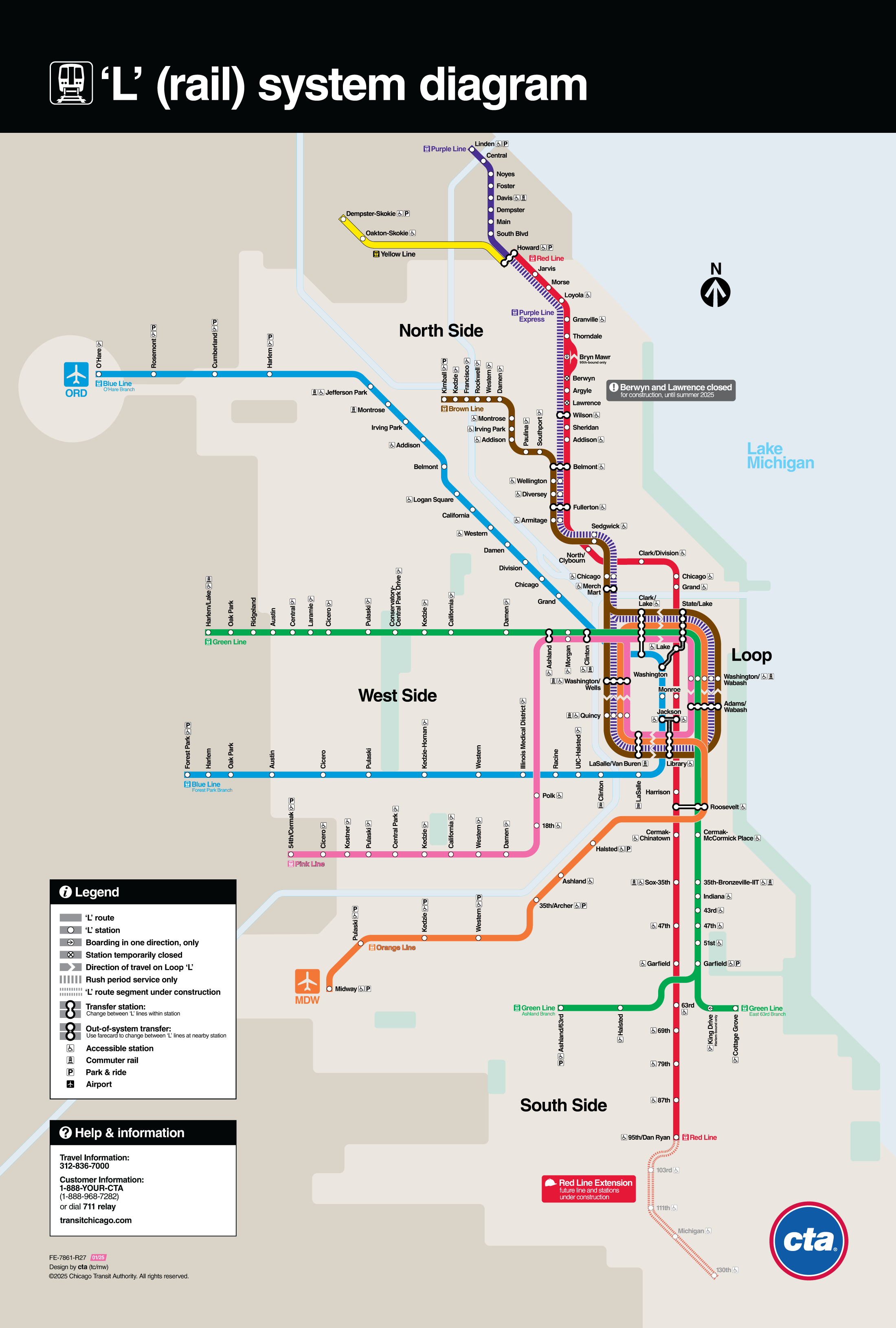
Chicago resident here. The city making more from parking tickets is not exactly a selling point if you're the one paying them.
Before the deal we had 20-year-old meters which were generally 25 cents or 50 cents per hour (quarters only). Lakefront parking was generally free outside downtown.
After the deal, rates quadrupled or more and many more meters went up, including at the lakefront. Now there is always a worry about whether you're paid up enough to finish a picnic. At least we can pay with credit/debit cards through an app (progress!).
The deal was a con from the beginning to help fill a budget shortfall and every resident who drives felt the effects, and will for the rest of their lives.
What seems to be an economic innovation is also often a political innovation. If Chicago was losing money on parking, they have the obvious remedy of raising the price. But they would face significant political blowback.
So instead they "sell" the parking revenue to a "private" operator who then raises the price. The service provided by the metering company is not just operating the meters but also taking the blame for the cost of parking. This way the city government — i.e. the people in the city government — get to throw up their hands and point at their predecessors.
I don't even think this would be a bad thing if negotiated properly without corruption. Honestly seems like a good solution to the political parking problem
Higher parking rates means fewer people driving, which is a long-term win. I highly doubt this was the top priority for the people who set the Chicago parking rates, but it's actually a good thing for the city.
Yes, you can argue "it just means parking is for rich people" -- to which I'd respond "keep increasing the parking rates, along with some other tactics, and even rich people will turn to other means of transportation."
Here in Amsterdam, the city government is deliberately doing things like raising parking rates, closing streets to car traffic and removing street parking -- all in an effort to reduce car usage.
Two issue -
US is incapable of building transit infra. We should be able, but the last 50 years have shown otherwise. Making driving harder and praying that somehow makes transit good is not a solution, though many cities are now trying that.
I think a lot of Euros misunderestimate (to quote Dubya) how much more extreme North American city climates are. Using wikipedia data, Amsterdam's lowest mean temperature month is January at 3.8C, and highest mean temperature month is July at 18.1C.
Chicago has 3 months below 3.8C per year, in fact it's below 0C for 3 months. Plus 4 months above 18.1C. Some of our climates just aren't terribly comfortable for biking here. NYC is not much better either.
The US has built lots of transportation infrastructure over the last 50 years, including astounding amounts of highways.
I think the bigger issues here are (1) a regulatory environment that heavily disfavors mass transit, and (2) a suburban (and, increasingly, urban) culture that prefers isolation to the risk of "undesirables" brought into their neighborhoods by mass transit.
As a small example of this: DC's metro was conceived a little over 50 years ago, and opened its first line about 47 years ago[1]. It's still expanding, and yet many of its stations are inconveniently placed because the communities it served didn't want DC's plurality black population entering their segregated suburbs[2].
DC metro was falling apart with massive service cuts as recently as like.. last year wasn't it? As I recall they had some massive deferred maintenance on the rolling stock causing derailments.
The DC metro's funding scheme can be most succinctly and politely described as "bonkers"[1]. I brought it up as an example of the US successfully constructing mass transit in the last 50 years, not a shining example of municipal management.
We're talking about Chicago. It already has transit infrastructure.
Would more be better? Sure. But this is a city where many trips can already be as fast or faster via transit than driving, depending on how difficult parking is and how far your "last mile" is.
The big thing that sucks for Chicago is that this shit deal makes it expensive to remove existing street parking and use the space for other things.
Naive question here: Taking out a block of parking would have decreased the City's bottom line already, right? They wouldn't get to collect from those meters. That would have affected the city's budget. The only difference here is that the City will now have to cut a check, but the effect on the City's budget seems similar. The piece I don't know is whether the amount is different, like if the vendor is allowed to raise rates as much as they want and ask the City to reimburse at that rate instead at the rate the City "would have" chargee to park if they'd retained the ownership.
It's an interesting question. I'm just assuming the cost-per-space-removed under this regime is far greater than the lost-revenue-per-space-removed that they would have otherwise suffered, but that's just based on the fact that the deal is known to be especially bad for the city. It stands to reason that they would have gotten screwed on this point as well, but that's just a guess on my part.
I would argue that in general that's probably true but not always. Reducing car trips can also relieve stress on the communities living in these urban communities or improve the quality in specific locations. Here outright banning or discouraging driving is done to improve walkability, reduce noise and quality of stay.
Communities living in cities also need traffic calmed, quieter places nearby. Banning cars here is often a good first step and reuse the street with cafes, restaurants and transportation by bike, public transport and cars only if parked somewhere else.
The U.S. is capable of building transit infra. We are incapable of overcoming multiple nesting, competing, and ensnared layers of local, regional, state, and federal bureaucracies to actually get them built, even when there is a taxpayer desire/mandate for such projects.
That's somewhat true. Government does have the power of eminent domain to ram projects through if they want to (e.g. much interstate highway development). However, the willpower to accomplish may rightfully be tempered (e.g. fatal opposition to interstate spurs in many major cities). A state government, using eminent domain, reserves the right to seize land for "public use", which especially includes interstate highways. A "public use" project providing real, tangible benefit for a region without unsustainable cost burdens for the governed should go through, full send.
That's not to dismiss the value of local advocacy but merely to highlight the careful balancing act performed by government to maintain favor in eyes of its constituents. The fundamental tension between the People and the Government should err toward the People, as long as you place stock in a government "of the people, by the people, for the people."
Transit is a false choice if your trip takes 30 min by car and 2 hours by bus.
This is why I am not a fan of congestion pricing even though I want a more transit oriented US. The US across the board gets less transit for its money than the rest of the world. Until we get costs under control it’s hard to imagine our cities building enough of the right kind of transit.
Chicago in particular was frustrating as a tourist as I found pretty much any trip not involving the loop to be tedious and lengthy.
It's not incapable. We used to have massive passenger rail networks 100 years ago. Lobbied interests destroyed them. They can only come back with a fight.
I mean sure, yes.
But the loudest voices right now are the "ban cars" crowd.
Which seems like all that will do is make life even more miserable in hopes of.. then forcing transit to be built?
Congestion pricing in NYC is a convoluted mess with perverse incentives because even the anti-car lobbyists are not actually our friends.
The plan as it stands will actually penalize private car drivers while allowing ubers/lyfts/taxis to enter/exit the congestion zone unlimited times per day for 1 toll fee. Given that Manhattan 9-5 weekday traffic is largely for hire vehicles, this is completely screwed up.
Transportation Alternatives for example, lists 2 of its biggest donors being Lyft & an automated toll/ticketing tech company, lol.
Yes, the car culture of Amsterdam, in one of the most densely populated counties on the planet, surely should be the car culture of a country with endless tracts of land.
Voters (the important part of a democracy, you see) want to drive in the US. Therefore, there should be no attempts to thwart people in that goal.
And to speak to that, Amsterdam has ample places to bike, a strong bike culture, paths, public transportation. It makes sense to remove unused parking spaces, and Amsterdam already has loads of places you cannot drive.
This is not Chicago. Suggesting people remove parking spaces before providing strong, complete, full alternatives, such as extensive piblic transport, and alternatives to cars, should be criminal.
it's not the wrong way because it's not always about the needs of the suburban/commuting community. Reducing car traffic can be a goal itself because it calms the neighbourhood for the community living in the urban areas or enables car-free, walkable zones reused for cafes etc. Those places can often fundamentally not coexist with cars. Parking can also be removed just because it's needed for other infrastructure, e.g. bike lanes. There are many reasons to remove parking spaces.
So I would say that usually it's about providing incentives to use public transit and reduce the incentives to drive, but sometimes it's purely about reducing traffic.
The poster also said that he's a former chicago resident (in his bio it says he's actually from chicago), so he exactly knows what he's talking about.
The poster also said that he's a former chicago resident (in his bio it says he's actually from chicago), so he exactly knows what he's talking about.
That's a logical fallacy.
So I would say that usually it's about providing incentives to use public transit and reduce the incentives to drive, but sometimes it's purely about reducing traffic
It should never be about either of these. Instead, provide public transportation people want to use. Carrot, never stick.
No it's not? It gives him credibility. You can not lecture someone about the car culture in an area they've lived in. He has literally lived there and in his case, as I understood it, even grown up there. It seems like you are suggesting he only knows amsterdam and does not get that chicago is different.
> It should never be about either of these. Instead, provide public transportation people want to use. Carrot, never stick.
This really ignores the effects of car traffic on the communities. Reducing traffic is a valid goal and sometimes the really only goal. It might be because of and unacceptable level of noise, or pollution or something else like an increase in safety for people on foot. Then the current amount of traffic is just not acceptable, you might not care that much if they end up not taking the trip, switching to public transit or driving somewhere else because your only goal was the reduction of car traffic in a specific area. A good example is barcelonas superblock concept, where you minimise through-traffic through specific blocks to enable more walkable, bikeable and livable neighbourhoods for the inhabitants of these urban neighbourhoods. Within reasonable bounds, neighbourhoods should have the ability to limit excessive car traffic in the area they are living in.
The metered street parking right now in LA is usually $0.50-$2.00/hour depending on the area so that seems quite normal to me. Our meters are pretty good too and you can pay in coins or card: https://ladotparking.org/parking-meters/single-multi-space-m...
In much of Europe, rather than cheap 50¢/hr or whatever parking, it's more common to have no fee but still a time limit. (Or, in city centres, a high fee and a time limit.)
Free/cheap parking is a driving subsidy. In fact the old prices were even worse than that; the prices were not high enough to actually keep spaces available, so it ended up being more like a lottery system. The correct solution would have been to just raise prices and fix enforcement, but the city dug themselves into such a financial and political hole that it wasn't feasible to do without the sale.


This doesn't sound right to me, but if it is Varoufakis has a point.
Our contract, such as it is, with traditional capitalists is they employ many, produce some sort of value and keep as much profit as they can manage after labor and expenses.
If the Amazons and Googles of the world can generate their enormous revenues (and profits) without dispensing much of it to labor, essentially just collecting large rents in perpetuity, both traditional capitalists and workers are in serious trouble. That is a big shift.
Techno Feudalism, indeed.