Clear and interesting names is extremely good customer experience. Most companies name their products straight from the ERP system, creating incomprehensible codes that sounds like they come from Star Trek.
Ikea has pioneered so much within service design (design beyond the actual product). The in-store journey, the self-assembly, the assembly instructions, clear naming, clear product display, in-store restaurant experience. The list goes on.
After Ingvar Kamprad retired, he continued travelling the world to do store inspections. Full-day walkthroughs that started in the morning at the loading bay and continued throughout the store. Everything was inspected and a list of follow-up actions was created for the store manager.
Reminded me of something not as bad as that, but: another Japanese company (Shimano) also has confusing (to my American brain) product progression.
Currently, their road groupsets rank like this (low to high):
  Claris (8-speed)
  Sora (9-speed)
  Tiagra (10-speed)
  105 (12-speed, available in both mechanical and electronic)
  Ultegra (12-speed, electronic)
  Dura-Ace (12-speed, electronic)
More niche, but Ltwoo (Chinese bicycle parts maker) uses "R9" for its 11-speed groupset offering and "RX" for its 12-speed.
“Journey” is an interesting way to frame purposefully creating an incomprehensible maze to force end users to walk through the entire warehouse. One of the worse “clever” design philosophies I’ve seen, it’s actively user hostile
My guess is just that they are quite serious about user testing the manuals. 3-4 iterations and you're good to go. Many companies would never imagine that you could test manuals.
> Every possible product name is carefully checked to avoid undesirable meanings in other languages, political or religious affiliations and fit into our global profile.
I present to you "Svalka" wine glasses. Dump", rubbish heap", or easy, promiscuous woman of ill repute in informal Baltic (and Slavic?) slang.
Does anyone else get tripped up by the word "avoid" being positioned to apply to each item in the series, but then logically it must only apply to some (the first and second out of 3) items?
I have a "Särna" chair. "Sarna" in Spanish is "Scabies".
Fun fact: Although "Sarna" comes from Latin, seems like it's only used in Romance languages present in the Iberian Peninsula (Galician, Catalan, Portuguese, Spanish...) and not for example in Italian, Romanian or French, as it's an Iberian loan word. Most other languages derive from another different Latin word, "scabiēs".
The source of the word is almost certainly the Swedish town Särna in this case. Note that ä is not an a, in sound it's more similar to e than a, although it is distinct from both.
Sadly the materials in the lack changed over time, the insides are basically just cardboard honeycomb with a thin veneer around it.
So if you want to follow the lack mods on the web, especially ones written in the 2010s, you need to make sure you strengthen the legs to accommodate the hardware
> Did you know that we name around 2,000-3,000 new products every year?
I find this surprisingly high; I guess it’s _products_ and not _names_, meaning that five colors of the same product count as five new products but only one name.
They don't just sell furnitures, there is all the small accessories like cutting boards, plates, bowls, towels, cushions... Everything they're selling at their lowest floor before you reach the self-serve warehouse.
Also they insist on replacing perfectly good products to sell inferior ones (for bigger margins I guess).
Every visitor rave about and ask us where we bought our corkscrew but we can only reply it was in IKEA but they decided they are too good for us so replaced them with inferior ones. Same happened wuth a vegetable peeler that I let go when I divorced but should have fought for because I never found one as good and IKEA enshittification made sure I can't buy it again.
I was looking at IKEA's home automation stuff, some of which uses the name TRÅDFRI and I thought the "FRI" part sounded like "free" and sure enough this just means "wireless". I'm guessing the "TRÅD" part is possibly a cognate of English "thread", so "thread free" is a literal translation. (I don't speak Swedish so forgive me if I'm completely off on this.)
English and Swedish have tons of similar words since they are closely related, as do most Germanic languages. The older a word is, the more similar it usually is.
Fun Dutch observation:
IKEA’s ANTILOP high chair sounds like “anti lopen” in Dutch.
“lopen” = “to walk”
So the name can be interpreted as “anti walking” or “prevents your baby from walking away.”
I know it’s actually named after the animal (antelope), but the accidental Dutch wordplay is perfect for a baby chair.
Is also a Swedish word, though slang, the imperative form of paxa which basically means the same as "dibs!" If I know my english colloquialisms correctly.
For a Swede it must seem kind of strange to understand the product names. You see an ACORN toy, a NIGEL bookshelf, and the CROYDON sofa... which sounds like it belongs in a council estate flat.
Definately more fun would be the Polish version. How many people can pronounce the BYDGOSZCZ sofa, the PRZEMYSŁAW bookcase and the PSZCZOŁA soft toy?
It's not even that hard? Polish always takes a lot of crap for using z to modify the previous letter in exactly* the same way that h modifies the previous letter in English.
* I'm sure it's not exactly the same, but people appreciate the effort of getting 90% of the way there by doing that.
As a Swede, I always enjoy Ikea product names. Many of them are based on their actual function or category. Some are wordplay related to this. For example:
Rinnig - a kitchen towel called "runny"
Skaftet - a series of standing lamps and lamp stands called "the shaft"
Fejka - plastic plants literally called "to fake"
Knöckla - A garbage bin called "crumple up"
Some I don't get but are still funny
Ostbit - wooden serving tongs called "piece of cheese"?
The fact that Sz in Hungarian reads as s and other way around, S becomes sh - is mind-boggling especially for Poles, where Sz is pronounced as sh. and S remains s.
Funnily enough, there are quite a few IKEA products with Finnish names. (Most are place names from northern Sweden, where there's a significant Finnish minority.)
The Tornedalen people are kinda their own group with their own language (Meänkieli). To an outsider it might sound like Finnish, but it's not much closer to Finnish than Yiddish is to German.
Meänkieli split from what became the Torne Valley dialects of Finnish in 1809, when an international border suddenly appeared in the middle of the region. To a Finnish speaker it sounds like a bit old-fashioned dialect, but it's mostly intelligible. It's definitely closer to standard Finnish than Karelian, which takes a lot of effort to understand.
Not so sure. As a native Finnish speaker, I'd say most of us would understand Meänkieli just fine, especially anyone raised on the coastal areas where colloquial Swedish loans are more common in general.
You really wanna get weird, there's those continents of Asia, Africa, and South America, full of different sounds to use for names. Ikea is Swedish, so they get to propagate Swedish culture to the rest of the world.
I can just imagine Chinese IKEA, their entire product list would be Shíshì shīshì Shī Shì, shì shī, shì shí shí shī Shì shíshí shì shì shì shī Shí shí, shì shí shī shì shì Shì shí, shì Shī Shì shì shì Shì shì shì shí shī, shì shǐ shì, shǐ shì shí shī shìshì Shì shí shì shí shī shī, shì shíshì Shíshì shī, Shì shǐ shì shì shíshì Shíshì shì, Shì shǐ shì shí shì shí shī Shí shí, shǐ shí shì shí shī shī, shí shí shí shī shī Shì shì shì shì.
Has anyone else noticed that Ikea meatballs aren’t as tasty as they used to be? And then there’s that whole issue of there being, like, 4 different types, and none of them seem to be what they sound like.
its not all that strange tbh - im learning danish which is adjacent enough to swedish that I can understand most of the names - sometimes they aren't relevant to the product function, sometimes they are, but they're just names. Is it strange to you that the word "photoshop" uses english language? what about a Hamburger being named after a place?
Nitpicking but your examples all have a clear etymology that may even help you deduce the purpose of a thing.
Hamburger means 'from Hamburg' and can be short for 'in the style of Hamburg', which sounds perfectly normal to a native. This is, would I say, less strange than if it was named 'Hamburg', which seems to be the case of IKEA furniture.
Photoshop, in the same way, seems to refer to a photo workshop, which once again has an etymology, as it refers to the initial purpose of that program, reworking pictures.
On the opposite, if things are just named 'for the lulz', and my desk is called Boston, my text editor 'golden retriever' and my lamp acorn, confusion may at some point arise.
GNOME used to give software applications names of common nouns that were usually not strongly related to their function: Nautilus, Palimpsest, Totem, Tomboy, Seahorse. At some point I think they decided to move away from this because they found many users had a hard time remembering the names.
The way I remember it, GNOME moved away from funny release codenames all the way back around 2004 or 2005, and then gradually moved to application names reflecting their generic function (eg. gedit was for a long time called "Gnome Text Editor" in the .desktop file, basically hiding the component name in an about dialog, before another "gnome text editor" was introduced to replace it, but I haven't tracked this and maybe it's just a project rename too).
I do believe it is acceptable for software to have playful names. After all, that's how "googling", "tweeting" have entered the vocabulary (and no, nobody is "facebooking"). I am pretty sure global human population is not so dumb to not be able to learn to associate a non-function-reflecting name to its purpose. If anything, it's a marketing thing.
Every furniture chain I’ve been in contact with have had furniture names like “Boston” and “acorn” and is “golden retriever” really that far off from Apple old OS naming scheme with snow leopards, lions and cougars?
I'd love seeing some Polish names in products and learning their pronounciation: but as a fellow Slavic language speaker (which there are hundreds of millions of, compared to 10 or 20 million Swedish speakers), I imagine I can do a pretty good job. So I think Swedish is still globally more playful.
(I'd read it as БИЂОШЧ/БИДГОШЧ, ПРЗЕМИСЛАВ and ПШЧОЛА/ПШЧОЉА — you can check on Google Translate if I am close :))
I have always thought this about western media. For all of us in non-us countries, the locations, roads and objects are all slightly foreign to us, giving it that other-world feel movies have.
But for those in the US, wouldn't it all be a bit familiar? Whenever I watch a movie set in my home country with home accents and locations, it always feels a bit too familiar and it can cheapen the feel a bit.
Well, I'm an American, but US media is disproportionately set in Los Angeles or NYC, and I haven't been to either of those places.
I was watching Monk recently, and it feels kinda neat seeing a show shot in San Francisco because I used to live there. I wouldn't say it feels "cheap" though.
Ikea mobile application has little speaker near the product name that invokes pronunciation - sadly, that's not available on desktop site. I still tend to read Swedish accented letters in these names as German umlauts.
So that wouldn't be a problem if Polish names would be provided with audio examples.
By the way, the communistic period here was full of products using regular words, name of places or people’s names. We had Wisła, Bieszczady wall units. First Polish color TV was Jowisz (Jupiter); first TV ever my mother had was called Szafir (Saphire). Then Szarotka (elderweis) or Sylwia radios from 50s and 60s respectively. A clone of IBM PC with Intel 8086 (or with Russian clone) from 1986 was called Mazovia - Mazowsze which is a historical region of Poland, same name was also used for DOS encoding for that machine.
You have a point but in Branding, it is accepted that bold (noisy) and distinctive (rather than only descriptive) names are an advantage: Creating billion-dollar brands: Vercel, Azure, Windsurf, Sonos, https://www.youtube.com/watch?v=adyIaTopO6g&t=610 (Jun 2025).
> Every possible product name is carefully checked to avoid undesirable meanings in other languages, political or religious affiliations and fit into our global profile.
I love the JERKER desk that I bought 26 years ago, so I assume this rule must be younger than that.
Pax is another one that violates the rule that someone pointed out lower. Also Malm is a surname which is another violation of the rule (one of the characters in The Girl with the Dragon Tattoo was named, if I recall correctly, Stefan Malm). I remember reading the books with my then-wife and she said it was like reading an IKEA catalog. I thought she was referring to the character/place names, but it turned out that the second book had a long section where the titular girl furnishes an apartment from IKEA and—that chapter was exactly like reading an IKEA catalog.
When it comes to names like "MALM", it's likely incidental.
"Malm" is a a noun with several meanings, most notably "metal ore", but also some (more archaic) meanings like "area with sandy soil" or "city outskirts".
The fact that "Malm" also happens to be a surname is secondary; Swedish has a lot of surnames that are simply ordinary nouns or adjectives. A completely literal "No surnames, ever" rule would probably be quite a bit too restrictive. I suspect that the actual internal rule is "No names that are primarily (or solely) surnames", or something to that effect.
Currently 6833 people in Sweden have the last name "Malm", and some large fraction of them were born before 2005 (could not be bothered to check how many, sorry!).
Yes, they also sold a toilet brush named "VIREN". In Germany this is the plural of virus.
And some year ago Danes complained IKEA named carpets and runner after danish towns but never something "better".
Similar trivia with a Swedish connection: the original name of the Honda Fit/Jazz was Honda Fitta, but then they found out it's the Swedish word for "cunt" so that was a no-go.
I'm a Swede and I knew a guy named Jerker growing up. I always wondered if his parents gave him that name to mess with him. In Swedish "j" is pronounced as the English "y", so I think they could have at least spelled it as Yerker.
That's my name. When I asked my parents about it, they just said they liked it and didn't really think about any possible negative sides.
Introducing yourself to English speakers can be interesting... often times people won't catch the name when pronounced the Swedish way, so you end up quickly clarifying it by using the English pronunciation. Sometimes a hand gesture is needed.
I didn’t even know the name for the longest time. It’s only when I wanted to buy some extensions that I realized the cult status of that model, and that’s not (just) because of the name. It’s a truly great design and a shame that it was discontinued many years ago.
Looks like some of these place names have been overpowered in search results by their named-for sofa counterparts! When searching Finnala, Sweden, I essentially only get search results for the sofa, and even the Google AI overview, while admitting it's a locality in Sweden, shows me a picture of the sofa!
> In other parts of the world, they are basically incomprehensible, but fun!
For some reason unknown to either of us it really pisses off my wife when I refer to our IKEA furniture by the Swedish names. I think it stems from a deep seated disdain she has for flat pack furniture.
Vinheteiro? No, although when he was about two my son would sit at one of the synths and do that stare-intensely-jab-finger-in-the-air thing.
No, I just have a terrible psychological condition where I cannot say the word "no" when someone says "Hey EB I have this thing sitting in a cupboard, take it off my hands for 20 quid".
Chiming in for the Ikea fans - you should definitely listen to the Acquired episode about it! It was fantastic and covered this and other fun facts
https://www.acquired.fm/episodes/ikea
Amazing. A post asks a question in the title that I actually want answered, and then goes on to answer that question clearly and succinctly. Maybe the best corporate content I've seen this year.
But how can I find the answer to the question without reading punchy headers followed by paragraphs like
> How We Leverage Naming
> Our Naming Strategy, Explained
> Why Swedish Is Important
> The Bottom Line
And unforgettable aphorisms like
> It isn't just a name—it is the output of a scalable, globally coordinated, linguistically validated, Swedish-inspired naming framework designed to optimize brand consistency
to let me know? I'm completely lost on this page and can't find the answer without these.
Those are the letters we have that are distinct from English. Not exotic to us, but yeah, "weird letters" is probably considered part of the international brand now.
By the way, we consider them unique letters, not A and O with diacritics. The Swedish alphabet goes …XYZÅÄÖ.
Oh, and I just learned that we only officially added W in 2006. Before that, it was considered a variant of V. We still pronounce them the same, which is why many swedes will mix them up when speaking English. Mostly in the W->V direction, but I've heard the opposite happen too.
I lived in Sweden in the late nineties. The local phone book had my Dutch name sorted under the V & W section because it has the word 'van' (means of in English) in it. In the Netherlands my name would be in the G section (van Gurp) because otherwise most of the phone book would have to be sorted under the V, which would defeat the purpose of sorting.
Just to make things worse, the Scandinavian languages use different versions of what have historically been the same letters, and collate them differently. E.g. Norwegian has æ (Ä), ø (Ö), å, collated in that order. Technically the Swedish variants are not part of the Norwegian alphabet, but they're typically collated with their modern Norwegian equivalents.
At least in Norwegian, ae, oe, and aa is also traditionally collated as if they were using these letters, so a word starting "aa" comes at the end of the alphabet, after z, oe and ae....
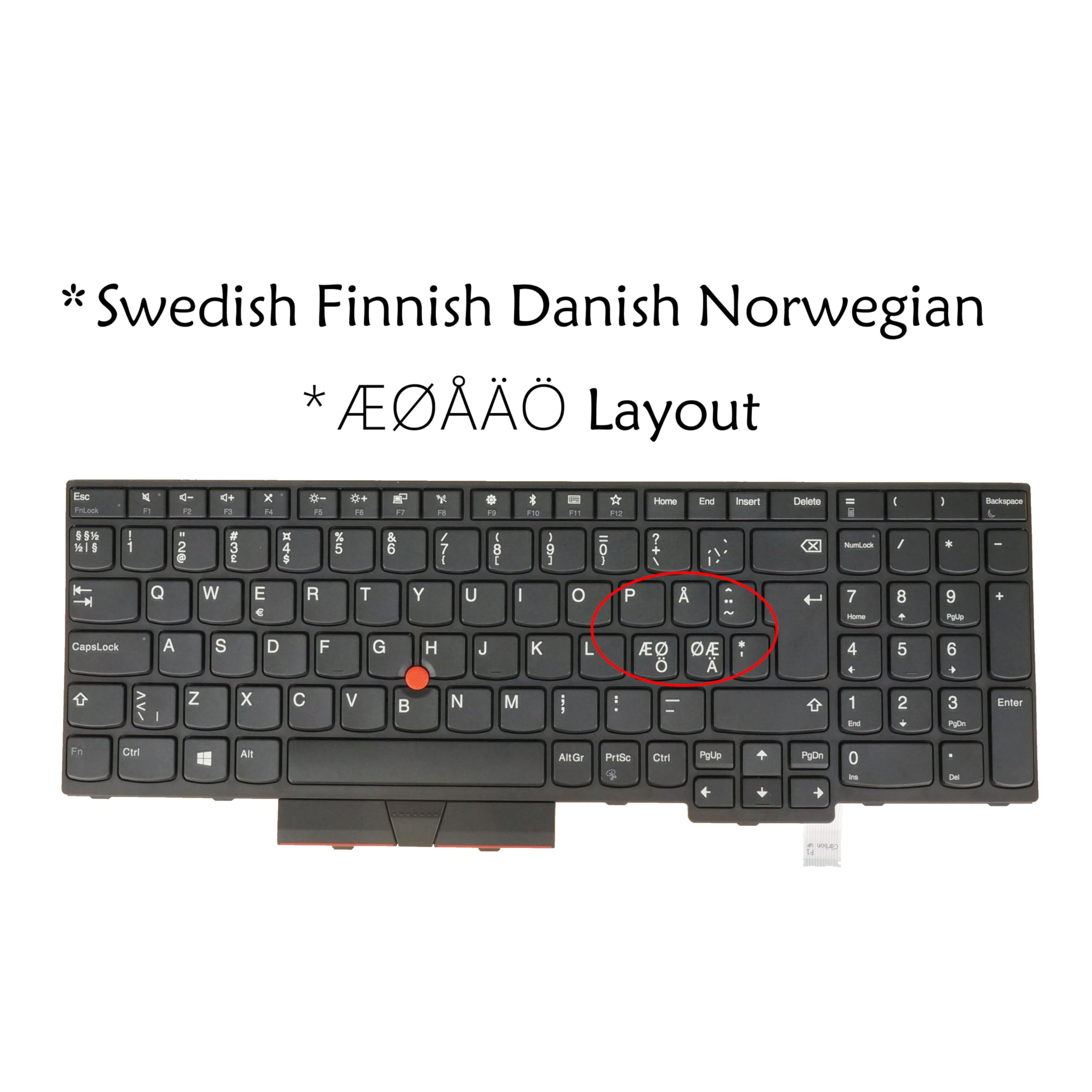
But they are on different keys on keyboards, annoyingly, leading to one "ÖÆØ" key and one "ÄØÆ" key on Scandinavian keyboards (not to mention the horrible "½§§§½|" key!).
I guess it helps with emphasizing their Swedish identity, which is one of their goals with naming. Doesn't gel too well with "feels good to say" for a non-native speaker, but I see their point.
Yeah, given they sell to every continent, I find it utterly impossible they truly tested this with each of the dozens to hundreds of languages their customers speak.
Not sure why, but when I see certain diacritics with latin alphabet, my brain tries to place the language somewhere in Europe. I don't know if I can call that an exotic feeling but it certainly feels foreign.
Scandinavia and the Nordics are quite fancy and refined for Americans. Lagom, hygge, fika, the minimalism, the enlightened equality and solidarity, good education, little crime, highest happiness ratings, even prisons are like hotels, etc makes it a kind of imagined lifestyle that's cozy and thoughtful and so on.
Most likely. In the early 90s there was a knock-off of Ikea called Stør which used the ø for exoticism. I had assumed that it was a Danish company, but apparently, not: https://en.wikipedia.org/wiki/STØR (The store where I bought some of my first furniture from—off the 60 in City of Industry—was quite possibly the original location).
Stør was really blatant to the extent that they were successfully sued by IKEA for their duplication. They were eventually bought out by IKEA, probably for the real estate.
To reiterate on another comment that would make no sense to Swedish speakers. Å is a distinct letter, with a different and unique vowel sound. It is in no way "a slightly different kind of A".
Your suggestion sounds a bit like spelling Apple like AIILE and using the circles to form a cool infinity symbol. Or something.
Why should we treat a minor wiki page and some dude's personal site (who disagree with each other on totals) as authoritative proof Ikea is wrong about it's own catalog? Especially when it's not hard to find 1st/3rd party sources claiming an order of magnitude more products. Keep in mind, some things will also fall off the catalog over time.
I’m going to guess that a good chunk of products are named but never released. I’d love to know what products IKEA develops but decides to not release.
The product names have made me chuckle quite a few times in the past. Such an easy way to make your products more likeable.
Also, maybe semi-relevant: I made a small guessing game about the IKEA product catalogue in case someone wants to be lightly entertainment for two minutes [1].
This is so random. I had just pulled this exact page up this morning to settle a debate with coworkers over whether the product names were real Swedish words or not. I thought they were all made up!
Was very surprised to find things like “bookshelves are all men’s names”, “all names must have ä, å, or ö”, etc.
Complete coincidence that this is #2 today. Had to check that ’NaOH’ wasn’t one of my coworkers
If you ever find yourself in southern Sweden (or Copenhagen and fancy a train ride across a cool bridge) the IKEA museum at Älmhult is well worth a visit: https://ikeamuseum.com/en/
I was there three days ago, can comfirm. And if you want to stay overnight, you _of course_ sleep in the neighbouring IKEA Hotel! And if you check-in to the hotel first, you‘ll get a voucher for free entrance to the museum. Did I mention that an absolutely excellent breakfast is included in the very reasonable room rate?
And in case you visit the museum in the near future, they currently have a special (temporary) exhibition about IKEA's founder, Ingvar Kamprad, who was a very creative but also exceptionally socially and environmentally responsible entrepreneur. Nice contrast to today's appalling tech billionaires.
I'd suggest you look at it as funny and not annoying: IKEA in London, being a very multicultural place, likely has many non-native English speakers as well!
When all else fails, you can always go back to the basic international language of gesturing, pointing and acting out the use of something to get to your point. (Or more boringly, point at the name on your phone)
You could also try adapting pronounciation to what they might expect first, and then if you establish a friendly conversation, offer the real Swedish pronounciation next.
It sounds like that would be very much what use of Swedish names in a global brand should invite, and not annoyance for Swedes :)
> you can always go back to the basic international language of gesturing,
Doesn't really work for the kind of products they sell. E.g. going to the spare parts place and asking for a replacement part for Mörbylånga or Nackanäs. And I don't know the international gesture for a table. Besides, they have many tables.
I don't think saying "Bläddra", and signing that you're flipping through a book, helps at all either.
> You could also try adapting pronounciation to what they might expect
Right. This is what one has to do. But it feels like if you were to go to Russia and slowly and loudly say "I-ski want-ski a-ski table-ski". Except, you know, not offensive because I have the objectively right way to say it and the staff doesn't.
I'm not saying it's hard to do, but since once you know a language you pretty much cannot go back to hearing and reading it as noise, I stand by that it's a bit annoying to need to simulate how someone else would mispronounce it.
And this is unlike someone experiencing their names constantly mispronounced, because the people who get it wrong literally work for IKEA.
For comparison, say there was an English store in Netherlands, and you would have to look at the spelling every time in order to "simulate" which "s" should become "sch" to make the staff understand you. Saying it the dutch way may, to you, become a tongue twister.
> It sounds like that would be very much what use of Swedish names in a global brand should invite, and not annoyance for Swedes :)
You'd think so, but while a great brand, it causes practical annoyances sometimes.
They have a great selection of products. You could say they have a smörgåsbord of products. Or as you'd have to say in English to be understood, a schmoargoesboard.
As a related anecdote, I found it surprising when I moved to Switzerland decades ago, that speaking high German wouldn't really work with foreign-looking shop assistants - they'd only speak and even understand Swiss German.
> When Mötley Crüe visited Germany, singer Vince Neil said the band could not figure out why "the crowds were chanting, 'Mutley Cruh! Mutley Cruh!'"
But like those German speakers assumed German orthography, English speakers will assume English orthography when presented with Swedish words.
Only foreign words learned by sound have a chance of getting pronounced correctly, e.g. croissant or Djokovic... maybe even Smörgåsbord?
If there were a British furniture shop operating globally and using placenames for products, British people would have trouble asking the locals for HAWICK (hoik), LOUGHBOROUGH (luffburra), FROME (froom) or YNYSYBWL (anissabul)
They didn't assume German pronunciation without reason. The umlaut dots aren't for decoration in German and ä, ö, ü only sound one way - including in Swedish, which has ä and ö, too. There is no ü in Swedish maybe because the Swedish u sounds like the German ü already (and shifting it further would just make it sound something like an i).
I was surprised at a Jysk in Spain where I used the dialect pronunciation of a Norwegian city (saying Læknes for Leknes) when buying chairs with that name, and the girl not only understood me but used close to the same pronunciation when asking someone to get them from storage
I once mentioned a street name to a Dane, who didn't understand me, and when I showed her the written name she pronounced it the same way. Maybe sometimes people have weird assumptions how foreigners are supposed to sound.
In this case you would understand me if I pronounced "ABBA" the Swedish way, so the IKEA scenario doesn't happen.
Not that I do say it that way when speaking English, just like I don't say my own name in the Swedish way.
But if "ABBA" had been named "ÄBBA"[1] (to be clear, that's not "A with an accent", that's a completely different letter) then I would pronounce it "ÄBBA". And it would be annoying. But at least other music fans are not employed by ABBA, so shrug, Mötley Crüe.
I would imagine that a Chinese person would be annoyed if they had to refer to their president as "Eks Eye" when speaking English.
Or do you mean the accents in the ABBA songs?
[1] which would be confusing, all else equal, because it would be pronounced like Ebba in Ebba Grön, another band.
"If I was a rich man", "I feel good", "we don't need no education", the repetition of "and their bombs" in Zombie, "Me and Bobby McGee", the weird "this" pronunciation in "Sweet Dreams", making people mishear it as "these", etc… (just off the top of my head)
The (deliberate) almost nonsense in Nirvana songs, too.
It is funny (heh) that the "funny" in ABBA's "Money, Money, Money" and "Does Your Mother Know" is a misuse of the word that my mum makes all the time when speaking English.
Other than that, non-native English speakers having an accent is not really something to have an opinion about. I think most Swedes probably don't hear it, and think that the Skarsgårds don't have a Swedish accent, whereas I can almost always spot a Swedish accent immediately.
It is funny how those name often sound differently than intended in other languages while still remaining memetic. My best example is "Knorrig" as it sounds like a fun name for a pig since "knur" is a male ping in Polish.
I'm firmly in camp dad joke, but since Ü is a German letter that is not part of the Swedish alphabet, may I suggest you learn how to say RÄKSMÖRGÅS and update the joke?
The patched version might even work on some Swedish-speakers if you nail the pronounciation! :)
Swedish does naturally use a lot of letters with umlauts (e.g. a common plural suffix -är), so a noun with a special letter is usually not hard to come by, and looks more Swedish (than, say, Dutch or English, which are sort of cousin languages).
Most new drugs are apparently named by the three column method - each entry in a column is a random syllable, and one syllable from each column is randomly selected.
I remember that in Dutch product catalogs, IKEA often used the name Gammelgaard (referring to Niels Gammelgaard, a Danish product designer). In Dutch, "gammel" means "rickety. "
I always assumed the names were mostly random Swedish words picked for the vibe. The fact that there's a taxonomy behind them makes it much funnier somehow
IKEA is the new "fast fashion", but for furniture.
You buy something one day, and it starts to deteriorate and become janky after a year, and you'll have a buy a new one. All products have gone through spreadsheet cost optimizations.
It wasn't always like that. If you're lucky to get your hands on an old IKEA bookshelf (Billy), it's sturdy and will last forever.
We’ve had IKEA furniture for over 15 years, sometimes storing it in the attic for a few years after disassembling it, then assembling it again. We’ve also kept the main bodies of our living room furniture while replacing the doors. We sold the old doors on eBay, and other people reused them.
I also inherited some “regular” living room furniture after my mom passed away. It cost about four times as much as IKEA’s higher-end lines. After moving it from my mom’s place to my office, I can already see it falling apart after just three years (total lifetime as my mom only had it for two). The quality is so shite that I honestly wish my mom had bought IKEA.
In the future, I’ll either buy custom pieces from a furniture maker or choose IKEA's higher end lines for longevity and reusability.
They make stuff at all price points. The basic stuff is sturdy paper meant to last a few years, something like Ivar is solid (ish) wood and will outlive you.
A lot of people want this to be true, but alas it isn't. The stuff lasts. Probably for a simple reason: Any given product line is bought by millions of customers, so design flaws are quickly found and remedied. I see it as a form of safety in numbers.
Even the stuff they've traditionally been good at?
Funny thing is, I haven't bought much furniture for ages since my old IKEA stuff has lasted for several decades and is still going strong. Their major kitchen appliances are crap, though.
we miss it dearly in Russia. most (reasonably-priced) furniture we had before Ikea was worse, and what we have now is worse still.
high quality furniture loses most of its value the moment it becomes preowned, so it only makes sense to buy if you are absolutely certain you aren't going to move anytime soon, which is not realistic for most people. Ikea is just good enough.
> You buy something one day, and it starts to deteriorate and become janky after a year, and you'll have a buy a new one
I had a LACK table (9.99 euros at time of acquisition) last for 10 years before a move forced me to give it away. I also have a few random things from them (wooden cutting board, grater, I think a bookshelf) and everything is pretty OK, even the cheap stuff.
My first memory of being angry with not knowing English was when we were trying to read the pokemon or Yu-Gi-Oh cards and I clearly remember it being gibberish. Otherwise it's difficult to remember what it was like to not know a skill before you learned it, at least it is for me.
I love how the chose Verde, which means value, for their long time retired kitchen furniture. They were so good that they still sell above their original retail prices now.
> Every possible product name is carefully checked to avoid undesirable meanings in other languages, political or religious affiliations and fit into our global profile.
> Ingvar Kamprad, founder of IKEA, had a hard time remembering numbers and numbers
And also numbers I assume. Does it mean something like “endless stream of numbers”?
I’m very surprised that they have 2000-3000 new products every year. Checking every name against every language of countries they operate in to avoid “bad” names must be a pain.
The Swedish version of the page just says "siffror" (literally "digits", but colloquially "numbers") once.
I'm not aware of any relevant Swedish expression that would repeat the same word like that. Maybe something like "siffror och tal", where both words could be translated as "numbers" by someone not paying attention to the resulting sentence. :)
IKEA's naming is pure genius. I bought a few NÄMMARÖ garden chairs for my garden a few weeks ago. And the chairs really feel like the furniture the people on NÄMMARÖ - an island somewhere in the Bohuslän archipelago - have used for ages. But NÄMMARÖ doesn't exist and the chairs were made in Vietnam. Good quality though, and not too difficult to assemble.
A while ago I worked on a product which created a lot of media files for the user, and these files all needed to be named in a unique - yet human-pronouncable manner.
We considered using something like what3words[1], but then one bright dev came up with a way of constructing a filename using phonemes derived from the names of Austrian philosophers ..
This worked so well, for some reason - whether selection bias in the list created by the CEO for the purpose (putting that degree to good use, finally), or maybe just because Austrian philosophers all have great names for the purpose.
I confess that I do think about this a lot, as I am lost in the endless maze of Ikea stuff on my way for some meatballs.
Edit: I couldn't resist, it looks something like this:
    -- Unique filename generator based on phonemes derived from the top 10
    -- most well-known Austrian philosophers (per Pantheon HPI ranking):
    -- 1. Ludwig Wittgenstein
    -- 2. Karl Popper
    -- 3. Martin Buber
    -- 4. Paul Feyerabend
    -- 5. Josef Breuer
    -- 6. Ivan Illich
    -- 7. Otto Weininger
    -- 8. Alfred Schütz
    -- 9. Otto Neurath
    -- 10. Jean Améry
    --
    -- Phonemes / syllable units extracted from the names (approximating
    -- German/English pronunciation for pronounceability):

    local PHONEMES = {
      -- Wittgenstein
      "wit", "gen", "stein", "wig", "stein",
      -- Popper
      "pop", "per", "popr",
      -- Buber
      "bu", "ber", "bub",
      -- Feyerabend
      "fey", "er", "a", "bend", "abend",
      -- Breuer
      "breu", "er", "breuer",
      -- Illich
      "il", "lich", "ill", "ich",
      -- Weininger
      "wei", "nin", "ger", "wein",
      -- Schütz (approximated without diacritics for filename safety)
      "schu", "etz", "schutz", "shuets",
      -- Neurath
      "neu", "rath", "neur",
      -- Améry
      "a", "me", "ry", "amer", "ery"
    }

    --- Generates a unique, pronounceable filename.
    -- The random selection of phonemes is seeded from the current timestamp.
    -- @param extension (optional) file extension without the leading dot (default: "txt")
    -- @param syllable_count (optional) number of phoneme units to combine (default: 3)
    -- @return string  A filename of the form: <phoneme-combo>.<ext>
    function generate_austrian_philosopher_filename(extension, syllable_count)
      extension      = extension or "txt"
      syllable_count = syllable_count or 3

      -- Safety: ensure we have at least 2 syllables and a sensible upper bound
      if syllable_count < 2 then syllable_count = 2 end
      if syllable_count > 6 then syllable_count = 6 end

      -- Seed the PRNG from the current timestamp for this generation
      math.randomseed(os.time())

      local parts = {}
      for i = 1, syllable_count do
        local idx = math.random(1, #PHONEMES)
        parts[i] = PHONEMES[idx]
      end

      -- Combine into a readable base name (hyphenated for clarity)
      local base = table.concat(parts, "-")

      return string.format("%s.%s", base, extension)
    end

    -- Example usage:
    -- print(generate_austrian_philosopher_filename())
    -- → e.g. "stein-neu-ber.txt"
    --
    -- print(generate_austrian_philosopher_filename("log", 4))
    -- → e.g. "fey-wit-pop-rath.log"
The thing is that recent products are crappy. I got so many decades old secondhand things. They looked like regular old furniture and it was fine. Then I continued buying same things, but new. While the old furniture didn’t change at all the new pieces became yellow/brown after couple tears. We don’t smoke!!! It was a nightmare and I don’t buy IKEA products anymore.
Sometimes it works and name are weird, nice and fun.
But sometimes, quite a lot, I think that it is counter productive because the name is hard to remember, spell or say if local language.
So in the end, hard to say to a seller or type on the part screen the name of what you want. Most of the time you will not be able to remember what was the name of the thing and have to look around and find by categories to find again what you are looking for. And forgot the name already 3 days after.
And actually i was multiple time annoyed by that.
For example, look at the baby changing table name: ÄLSKVÄRD.
Also, hard to remember/pronounce name make it that often you are lost and confused between multiple names that doesn't make any sense to you like HFEREZR versus HORCRUX.
One case that frustrated me a lot is: good luck finding which white cabinet door you need to buy between VEDDINGE and VALLSTENA that are 99,9% the same, and have the same description on ikea website and shops...
In the warehouse you are looking for it, you look for the thing starting with the V, like VA...VII... something, and you find VEDDINGE. Was it this one i needed to be or another name similar?
I think your actual issue is that spelling and pronunciation are too inconsistent in your native language. With a more consistent language, it's pretty easy to remember foreign words and names using the pronunciation in your native language, assuming that the letters are mostly the same. You don't need to understand the word or know the correct pronunciation (though both obviously help).
There are 2 things that are unrelated.
When you can't say or pronounce a word, in most language it is hard to remember it.
Also, there is the question of degree of similarity or sound of reading unknown foreign words. If you don't speak ch ok Chinese, a lot of words with different meaning will kind of read or sound the same and it will be very hard to recall and differentiate them.
My point was that you can usually pronounce foreign words in your native language, if the alphabet is the same and your language has a straightforward mapping between spelling and pronunciation. And then you can derive the spelling from that fake pronunciation. For example, my native language is Finnish, and that approach works for most words in Germanic, Romance, and Baltic languages. Polish and Czech words are harder, as they often have too many consonants to have a Finnish pronunciation.
It goes beyond spelling - English doesn't even have all the phonemes to represent ÄLSKVÄRD if you wanted to (particularly the last half) so you just have to guess how that should sound anyways, especially since unfamiliaretters exist at the same time. If course you can do the approximation, it's not too hard to try, but you can do the same thing with spelling or any other attribute and end up with the same kind of problem - it just isn't the kind of word you'd deal with day to day.
I wouldn't mind if English had some standardized spelling though :D.
> Every possible product name is carefully checked to avoid undesirable meanings in other languages, political or religious affiliations and fit into our global profile
If I remember correctly, they had a desk named "JERKER" in early 2000s.
I worked with a guy called Jerker at IBM in Greenock, who soon learned to give back as good as he got. Swedish people can be pretty sarcastic, so he was what you'd call a "good cultural fit".


Ikea has pioneered so much within service design (design beyond the actual product). The in-store journey, the self-assembly, the assembly instructions, clear naming, clear product display, in-store restaurant experience. The list goes on.
After Ingvar Kamprad retired, he continued travelling the world to do store inspections. Full-day walkthroughs that started in the morning at the loading bay and continued throughout the store. Everything was inspected and a list of follow-up actions was created for the store manager.
reply